Can You DIY Replacing a Ceiling Light With a Ceiling Fan?
Replacing a ceiling light with a ceiling fan may seem like a simple DIY project, but the work often involves more than swapping one fixture for another. This article is for homeowners considering a ceiling fan installation and wanting to understand the electrical and structural requirements involved. It reflects Oakwood Electric & Generator’s experience installing ceiling fans safely and explains why proper support, wiring, and code compliance matter.
You stand in the lighting aisle looking at a new ceiling fan, imagining how much more comfortable your room will feel once it’s installed. The existing ceiling light is already in the perfect spot, so replacing it seems like an easy weekend project. After all, you’re just swapping one fixture for another, right?
Unfortunately, replacing a ceiling light with a ceiling fan is more involved than many homeowners expect. While the project may appear straightforward, ceiling fans place different demands on your home’s electrical system and structural support. Overlooking those differences can lead to a noisy, wobbling fan, damaged wiring, or even safety hazards.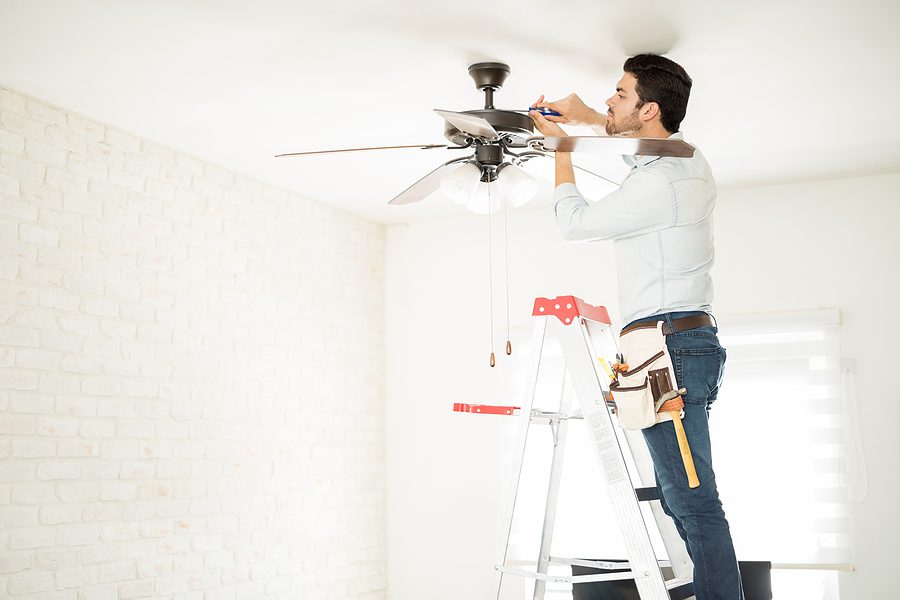
A Ceiling Fan Is Different from a Light Fixture
A ceiling light hangs in one place and remains stationary throughout its life.
A ceiling fan is constantly in motion, creating vibration that places added stress on the mounting hardware and electrical box. Standard light fixture boxes are often not designed to handle that movement, which can cause the fan to loosen or even detach over time.
Before any installation begins, the existing electrical box should be evaluated to determine whether it is rated to support both the weight and movement of a ceiling fan.
Why a Fan-Rated Electrical Box Matters
One of the most overlooked parts of a ceiling fan installation is the electrical box hidden above the drywall. Fan-rated electrical boxes are specifically designed to handle heavier loads and constant movement. They are securely attached to framing members or reinforced support braces that keep the fan stable while it operates.
A standard lighting box may safely support a lightweight fixture but fail under the repeated stress created by spinning fan blades. Replacing the electrical box is often necessary when upgrading from a ceiling light. While it adds another step to the project, it provides the solid foundation needed for safe, reliable operation.
The Existing Wiring May Not Be Enough
Many homeowners assume the wiring already connected to the ceiling light will work perfectly with a ceiling fan. Sometimes it will. Other times, modifications are needed.
A basic ceiling light typically operates from a single wall switch. Many ceiling fans include both a fan motor and a light. If you want separate wall controls for each function, additional wiring may be required between the switch box and the ceiling.
Older homes may also have wiring configurations that do not support modern fan controls without upgrades. Understanding how the existing wiring is configured helps determine what changes, if any, are needed before installation begins.
Improper Installation Can Create Ongoing Problems
If a ceiling fan is not mounted correctly, the problems usually become noticeable quickly.
You may hear clicking sounds, humming, or persistent vibration while the fan is operating. The blades may wobble even after balancing kits are installed. In some cases, loose mounting hardware allows the entire fan to shift slightly with each rotation.
Electrical issues can also develop if wiring connections are loose, improperly grounded, or incorrectly connected. While some problems are simply annoying, others may affect both safety and the lifespan of the fan.
Ceiling Height and Structural Support Matter
Not every room is automatically suited for every ceiling fan. Ceiling height affects both comfort and safety. A fan mounted too low may create clearance concerns, while one installed too high may not circulate air as effectively.
The framing above the ceiling also deserves attention. Some installations require reinforced mounting brackets or adjustable support braces to safely carry the fan’s weight.
Rooms with vaulted ceilings may require specialized mounting hardware or downrods to position the fan correctly. Evaluating these structural factors before installation helps avoid performance problems after the fan is installed.
Local Electrical Codes May Affect Installation
Electrical work is regulated by local building codes, and those requirements can vary by location. Depending on the scope of the project, replacing a ceiling light with a ceiling fan may involve code requirements related to electrical boxes, grounding, wiring methods, or permits. Some jurisdictions may require work to be completed by a licensed electrician. Following current electrical code helps protect your home’s safety while reducing potential issues during future inspections or home sales.
Common DIY Mistakes
Even homeowners with basic electrical experience can run into unexpected problems during a ceiling fan installation. Some of the most common mistakes include:
- Mounting the fan to a standard light fixture box
- Improper grounding of the fan assembly
- Loose electrical connections
- Overloading an existing circuit
- Incorrect blade installation or balancing
- Failing to secure mounting hardware properly
- Miswiring separate fan and light controls
Why Professional Installation Makes a Difference
Professional installation involves much more than assembling the fan and connecting a few wires. An experienced electrician can evaluate the existing electrical box, confirm the structural support is adequate, inspect the circuit, verify grounding, and determine whether wiring modifications are needed for the controls you want.
After installation, the fan is checked for proper operation, smooth balance, secure mounting, and safe electrical performance. Professional installation helps prevent many of the issues homeowners encounter after attempting the project themselves and gives you confidence that your new fan is operating properly.
Enjoy Your New Ceiling Fan with Confidence
Replacing a ceiling light with a ceiling fan may seem like a simple upgrade, but the work often involves more than replacing one fixture with another. Taking shortcuts during installation can lead to wobbling, excessive noise, electrical problems, and expensive repairs later. If you’re ready to upgrade a room with a new ceiling fan, contact Oakwood Electric & Generator today to schedule professional installation.